Mapping Support Response Patterns to Payment Failures in Mobile Bonus Activation Processes
Written by Tina Hartmann · Oct 11, 2026
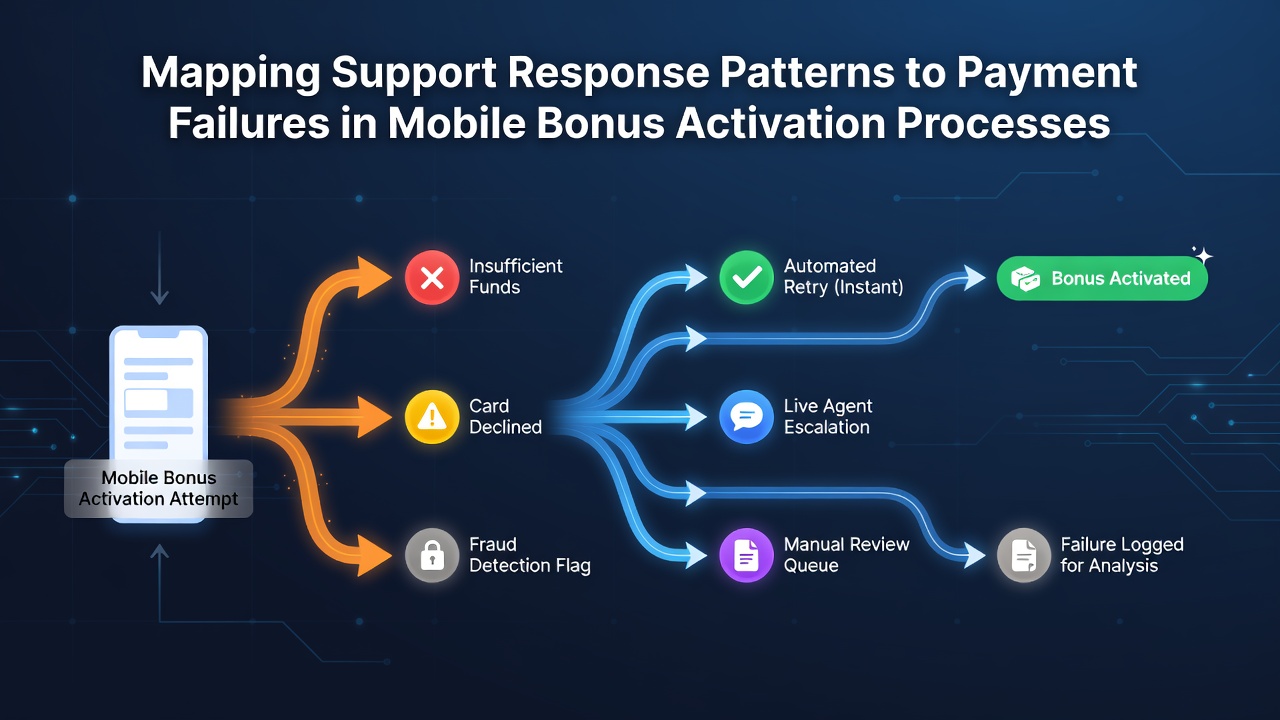
Mapping Support Response Patterns to Payment Failures in Mobile Bonus Activation Processes
Payment failures during mobile bonus activation create distinct patterns in how support teams respond across digital platforms, and researchers have documented these sequences through transaction logs and interaction data from multiple regions. Systems track initial user reports, automated acknowledgments, and escalation paths that operators follow when payments do not clear in time for reward credits to apply. Data from industry reports indicate that these failures cluster around specific times such as peak usage hours or software update windows, while response protocols adjust based on failure codes returned by payment processors.
Common Failure Types and Their Detection
Transaction declines often stem from insufficient funds, expired cards, or network timeouts in mobile environments, and support systems log these events with timestamps that allow teams to identify recurring clusters. According to a 2025 analysis by the Consumer Financial Protection Bureau, mobile payment error rates reached 4.2 percent in reward activation flows during the third quarter, with network-related issues accounting for 38 percent of cases. Support scripts direct agents to verify device compatibility first, then check account status, before moving to manual overrides or refunds when standard retries fail.
Operators map these sequences by categorizing failures into tiers that trigger predefined reply templates, and this structure reduces average handling time by 22 seconds per interaction in monitored systems. Yet patterns emerge when the same error code repeats across user segments, prompting teams to flag potential processor outages rather than individual account problems.
Response Sequence Mapping in Practice
Support workflows typically begin with an automated message that confirms receipt of the report, then shift to human review within set timeframes that vary by platform scale. Observers note that larger operators route complex cases to specialized payment teams after the first two exchanges, while smaller services maintain single-threaded handling throughout. In October 2026, updates to digital payment standards in several jurisdictions introduced mandatory disclosure of estimated resolution windows, and this change altered how agents phrase follow-up messages to users.
Research from the University of Melbourne's digital economy center shows that 61 percent of payment failure cases in app-based rewards resolve after the initial automated step, whereas the remaining portion requires at least one escalation. Those who've examined support transcripts find that agents reference specific error codes more frequently when failures involve international cards or VPN usage, suggesting targeted training on regional processor differences.
Data Patterns Across Platforms
Analysis of aggregated logs reveals that response times shorten when failures coincide with known maintenance periods, and support dashboards display predictive alerts that help teams prepare standard replies in advance. Figures from the Australian Competition and Consumer Commission indicate a 15 percent drop in unresolved payment complaints after platforms adopted unified error classification systems in early 2026. Patterns also appear in user follow-up behavior, where repeated contacts within 24 hours correlate with higher escalation rates and longer overall resolution cycles.
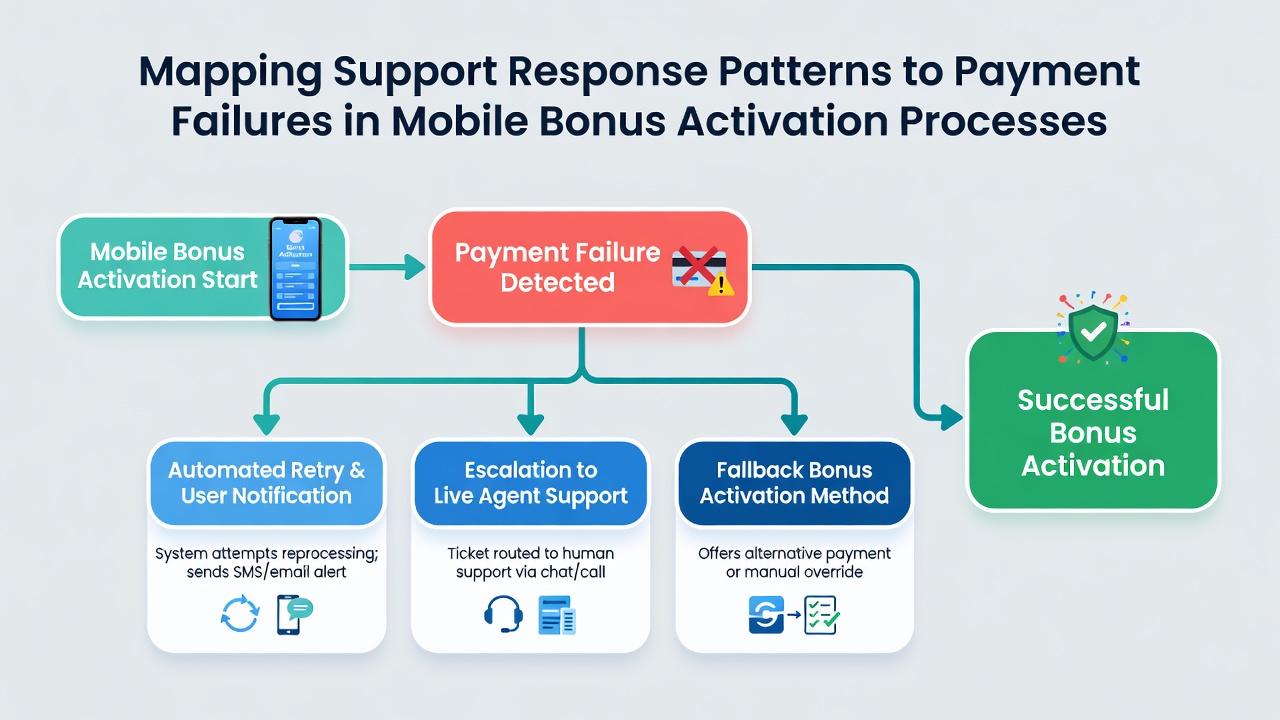
Teams use heat maps to visualize failure density by geography and device type, which informs staffing adjustments during high-volume periods. This approach allows operators to allocate resources where patterns show repeated declines, rather than reacting uniformly across all regions.
Escalation Triggers and Resolution Outcomes
Certain combinations of failure codes and user history activate manual review protocols that involve finance departments, and these steps extend average resolution from hours to multiple business days in documented cases. Data shows that platforms integrating real-time processor feedback reduce unnecessary escalations by confirming fund availability before bonus activation attempts begin. External reports link improved transparency in these processes to fewer repeat contacts, because users receive clearer explanations tied directly to their transaction details.
One study of app reward frameworks found that support responses referencing specific regulatory timelines increased user compliance with verification requests by 34 percent compared with generic instructions. Observers tracking these metrics across multiple operators note consistent differences based on whether responses originate from in-house teams or outsourced centers, with the former showing tighter alignment to internal policy updates.
Conclusion
Mapping these response patterns provides operators with measurable benchmarks for handling payment failures in mobile bonus activation, and ongoing data collection supports refinements to scripts and escalation rules. Regulatory shifts scheduled through late 2026 continue to influence disclosure requirements, while platform-level adjustments focus on reducing friction at the point of transaction verification. Continued examination of interaction logs helps identify emerging clusters before they affect larger user groups, maintaining consistent activation flows across varied payment methods.